Smart Solutions
Electronic Document Meeting Solution / Council Meeting Solution
A cutting-edge solution with efficient meeting management and voting features
Introduction to the Electronic Document Meeting Solution
The Electronic Document Meeting Solution enables efficient and eco-friendly meetings by creating a paperless meeting environment..
By digitizing meeting materials, participants can view and share documents in real time, and all information generated during the meeting process can be systematically managed..
This solution can be used by various organizations such as companies, government agencies, and educational institutions, and it greatly contributes to reducing meeting preparation time and saving resources..
Key Features of the Electronic Document Meeting Solution
Electronic Document Meetings of the Solution Key Features
Meeting materials can be shared and edited in real time, and version control allows you to track the document’s change history..
Meeting Schedule Management
You can set meeting schedules and automatically send alerts to attendees, and efficient schedule management is possible by integrating with a meeting-room reservation system..
Minutes Creation and Distribution
Record meeting content in real time, and after the meeting ends, automatically generate minutes and distribute them to attendees..
Benefits of Adopting the Electronic Document Meeting Solution
85
Paper Usage Reduction Rate
By using digital documents instead of paper documents, you can greatly reduce paper consumption and contribute to environmental protection..
40
Reduced Meeting Preparation Time
By eliminating the printing and distribution process for materials, you can reduce the time and manpower required for meeting preparation..
60
Faster Decision-Making
Real-time information sharing and an efficient opinion-gathering process enable faster and more accurate decision-making..
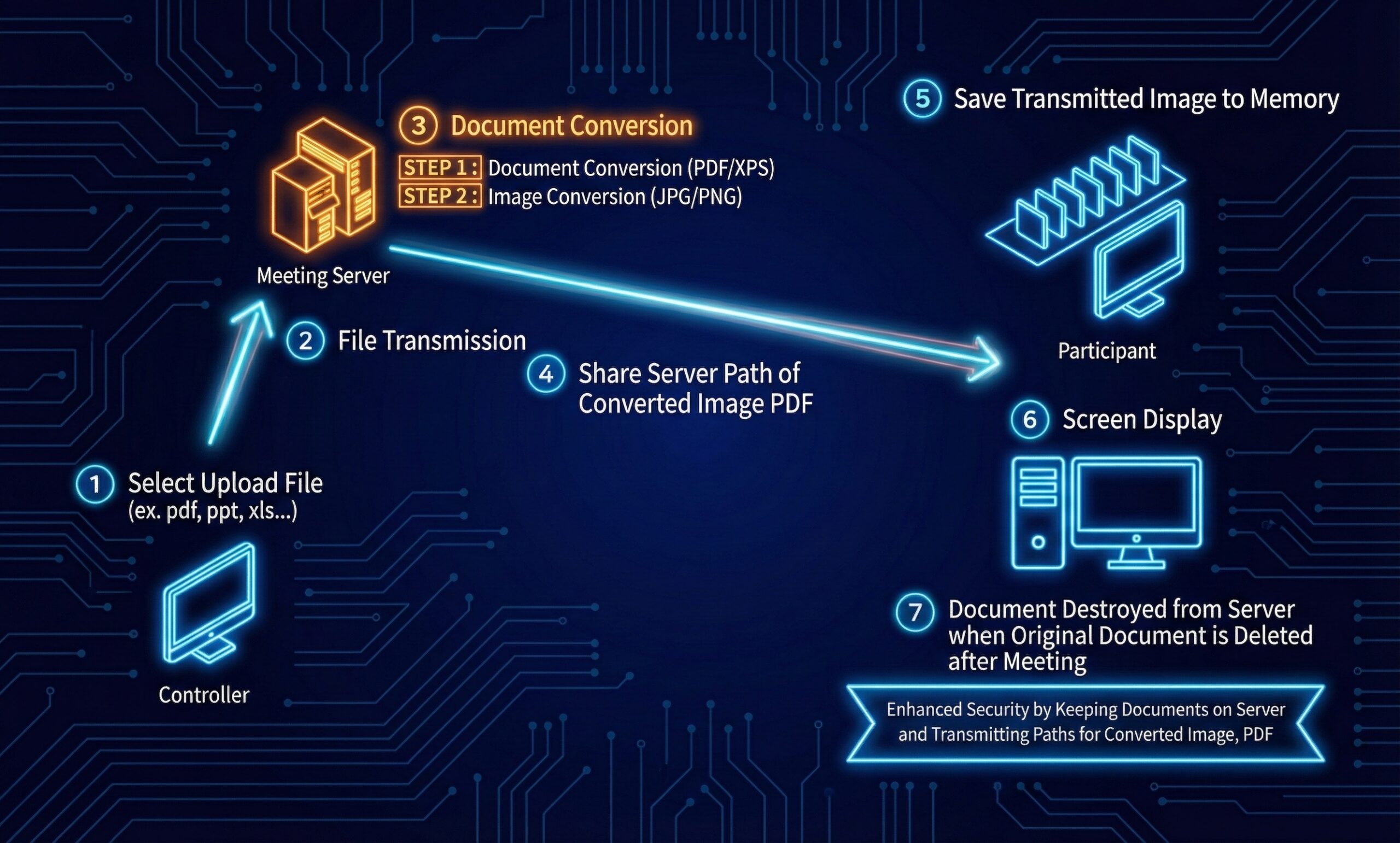
System Architecture Diagram
Key Product Features
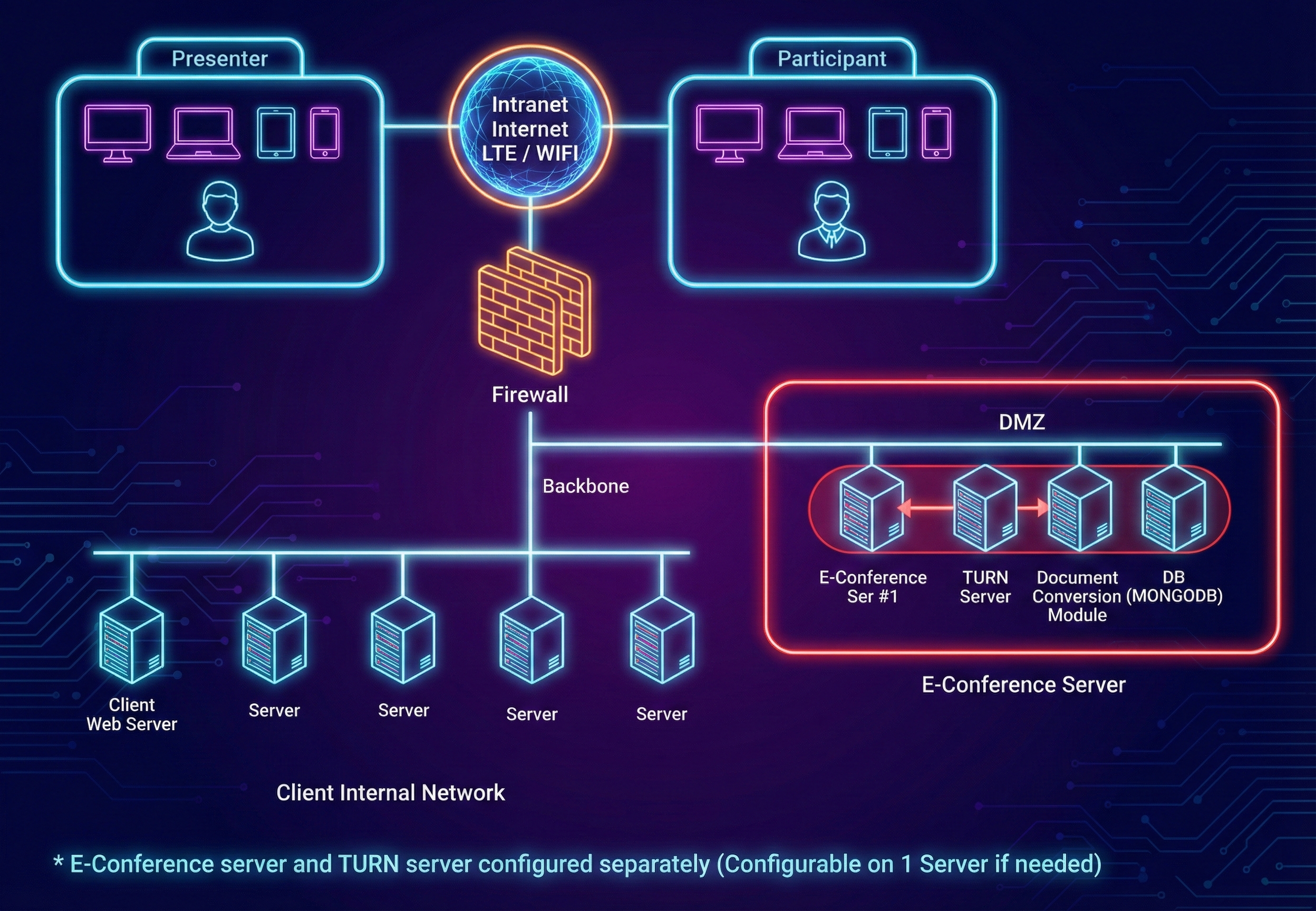
Document Sharing Flow Diagram
Introduction to the Council Meeting Solution
The Council Meeting Solution is a specialized meeting system used by decision-making bodies such as local councils and the National Assembly.
In addition to general meeting functions, it provides various features required for council operations, including a voting system, management of speaking requests, and application of parliamentary procedure rules.
This solution supports a democratic and transparent decision-making process and contributes to improving the efficiency and credibility of council activities..
Voting Feature Highlights
Electronic Voting System
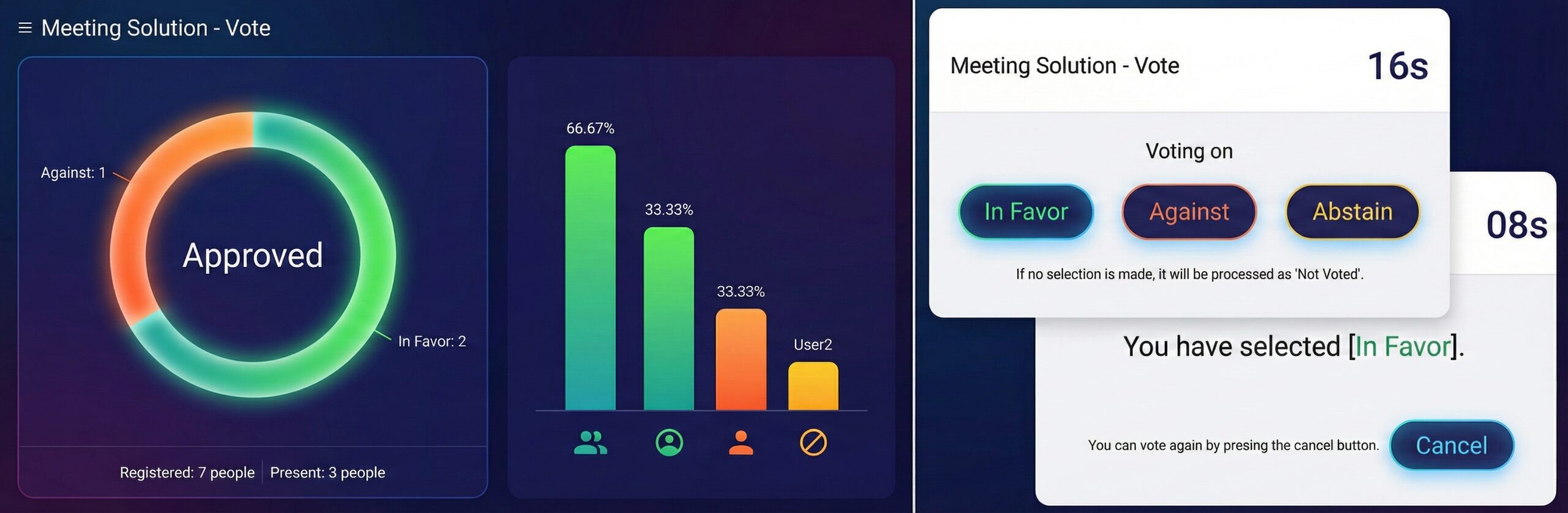
Through voting terminals installed at each council member’s seat, members can cast votes such as approve, oppose, or abstain, and the results are tallied in real time and displayed on a large screen..
Revote and Immediate Close
You can reconfirm the results and revote to improve accuracy and clarity. Administrators can quickly close voting to keep meetings moving and reduce confusion..
Voting History Management
All voting results are automatically recorded and stored, and past voting history can be viewed and analyzed when needed. This ensures transparency in the decision-making process..
Core Functions of the Council Meeting Solution
Electronic Voting System
Supports various types (for/against, multiple choice, secret ballot, etc.), and tallies and displays results in real time..
Agenda Management System
Systematically manages the submission, review, and resolution process for agendas, and digitizes and stores related documents..
Project Performance
Central Government Agencies
Public Institutions
Local Government Agencies
Domestic Companies
Overseas Companies

Central Government Agencies
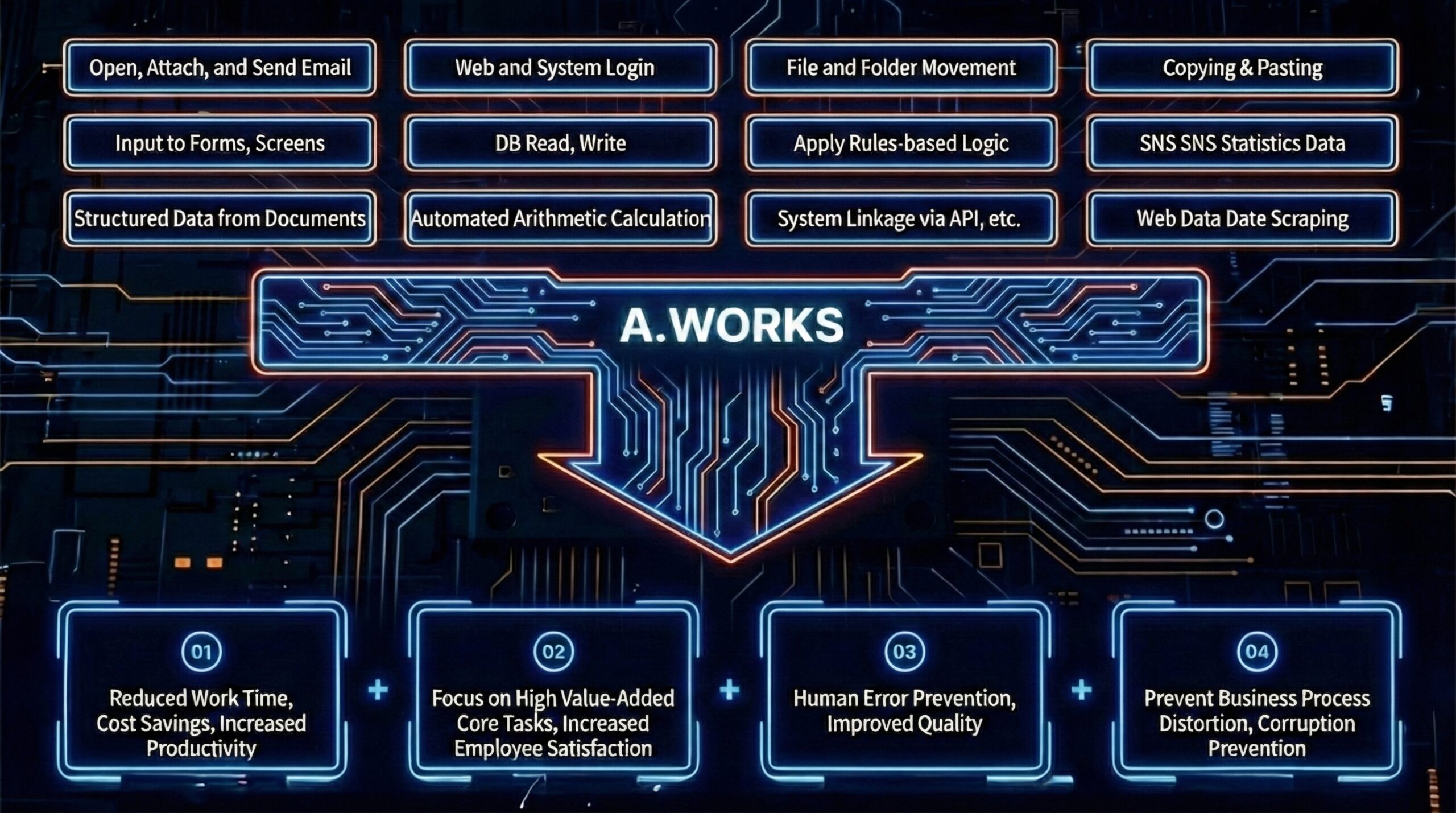
RPA Concept
A software technology that partially or fully automates repetitive work processes that have patterns and rules.
1
Operates at the UI layer of the current IT environment
without modifying or changing existing systems
2
PCDesktop or
Implementable in a virtual VDI environment
3
Technology that replicates
typical tasks performed by humans
Application Areas
Applicable to all tasks performed digitally by people that can be standardized and processed repeatedly
Clearly defined rules
tasks
Human intervention, subjective
judgment required
tasks that are not required
Across multiple systems
by logging in
tasks that must be handled
Tasks where repetitive work
causes frequent mistakes
OCR Concept
It refers to the task of analyzing optical character recognition image files and converting them into text.
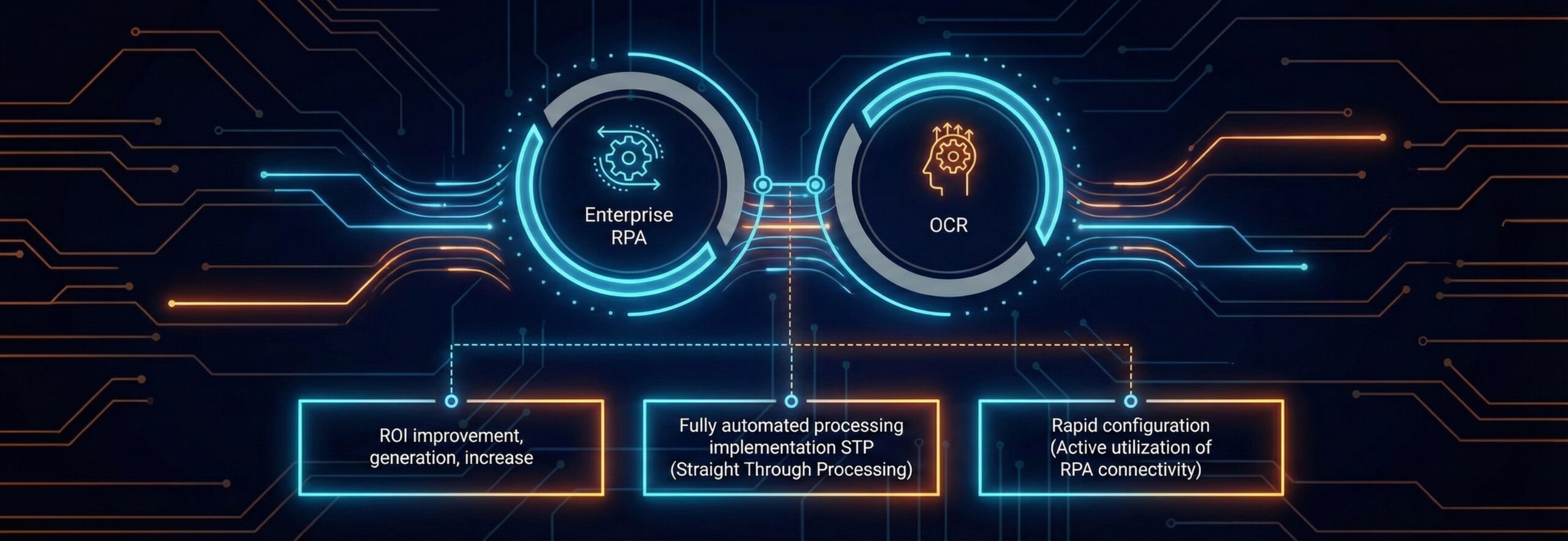
An OCR solution combined with RPA expands the range of tasks that a bot can handle..
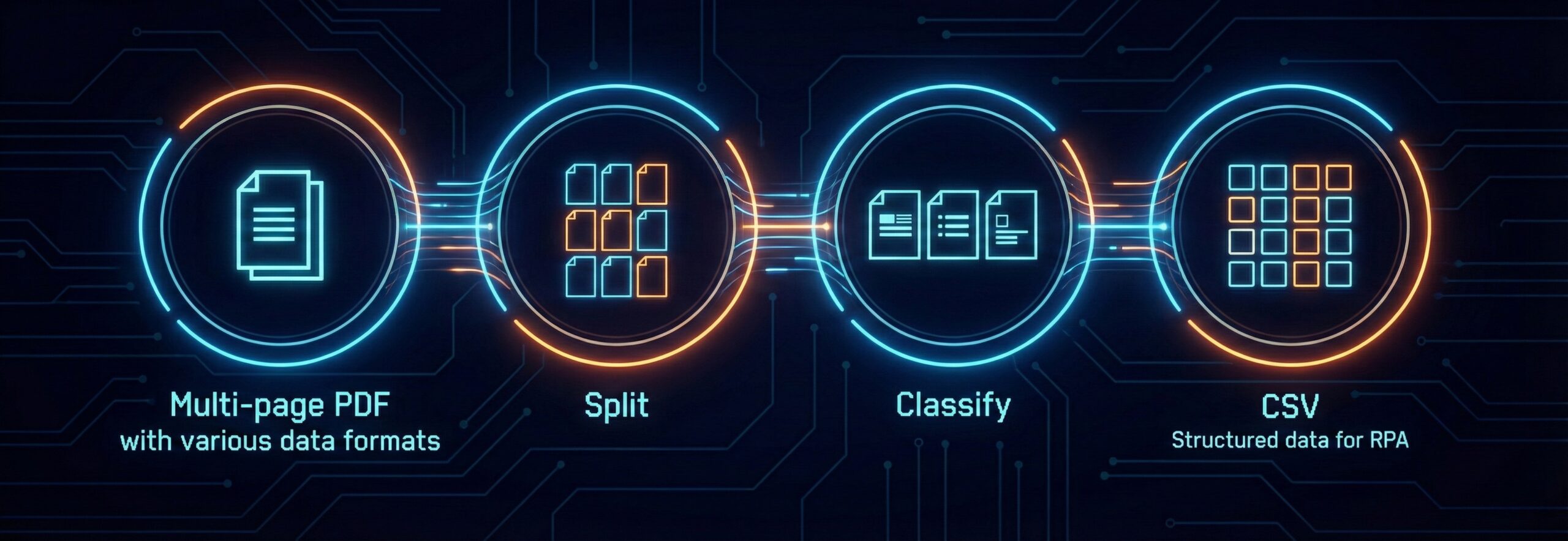
- After classifying documents of various formats by the same form type, perform OCR processing.
- Image → Detect text and text positions and extract the values at those positions (Generate text data from photographed or scanned documents)
- Extract and process required data from image files containing text (e.g., PDF)
Implementation Effects
OCR Through adoption, as a result, existing structured Data not only but also, Semi-Structured Data and Unstructured Dataof work utilization is possible.. Semi-Structured, Unstructured Data structure to, RPA use can data-ize .
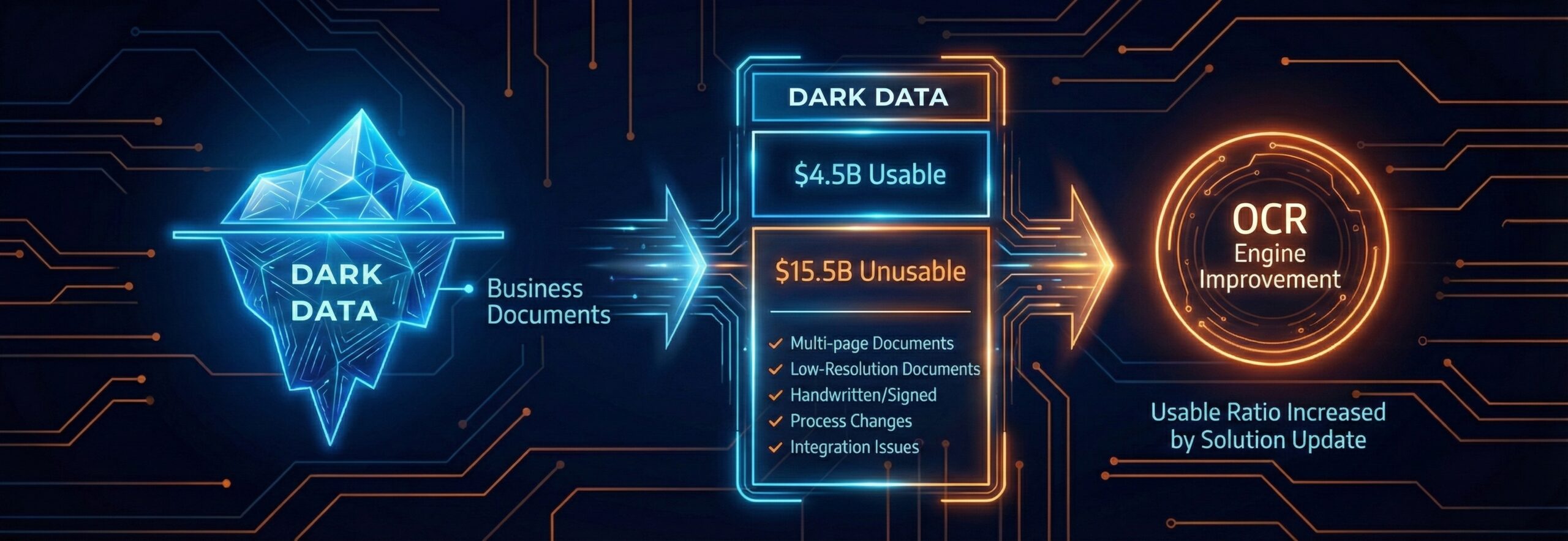
Beyond simply converting images to text, by integrating with RPA, it replaces people’s ‘eyes’and enables OCR processing of what is read with the eyes and entered by hand, and inputs it into systems via RPA. It also reduces the burden on staff and, with high recognition accuracy, moves toward covering human errors..